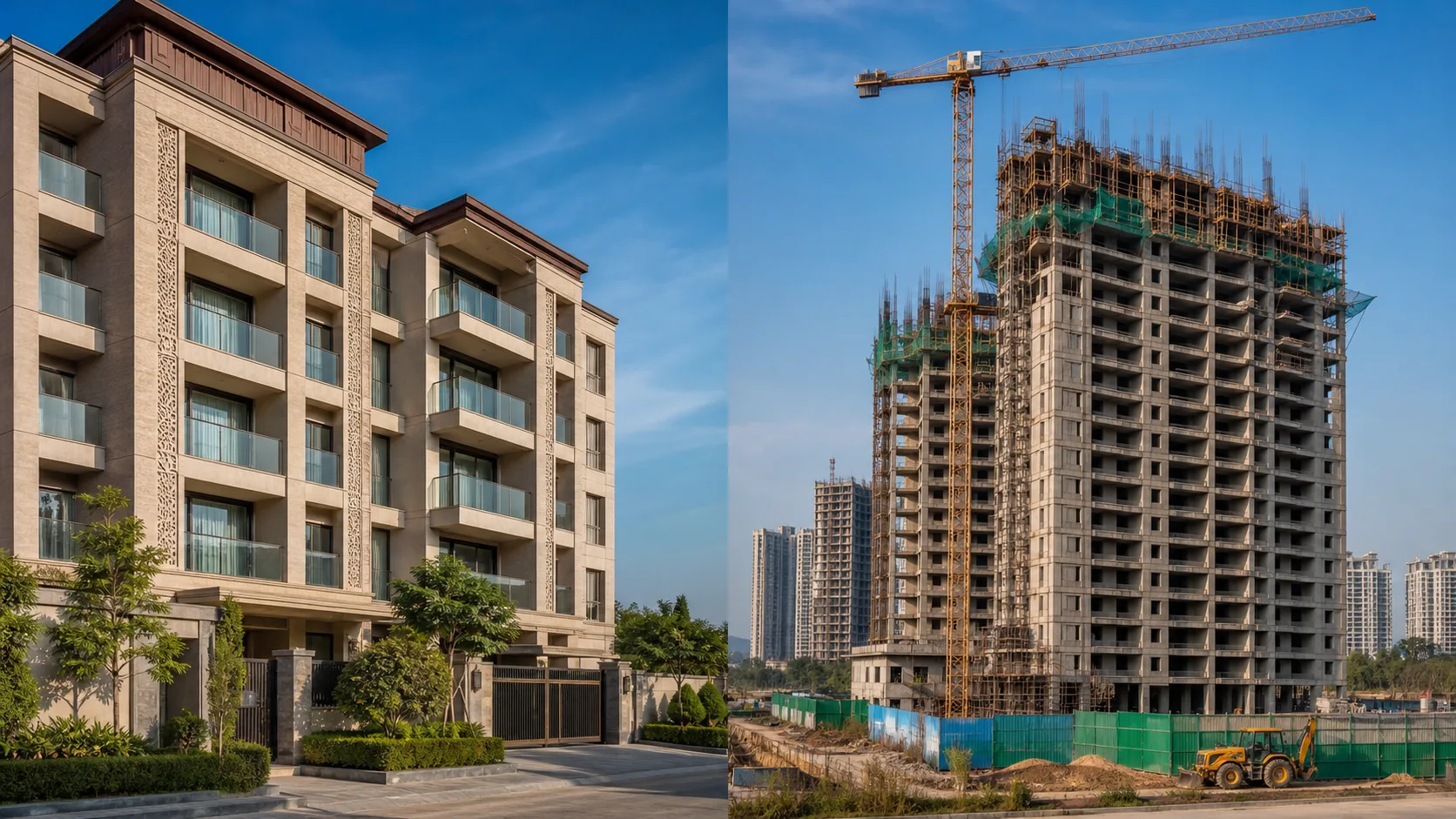
Ready-to-Move vs Under-Construction: Which Is Better?
Understand the price, timeline, legal risk and payment structure before deciding between a move-in-ready home and an under-construction property.
One of the first big decisions every home buyer faces is whether to choose a ready-to-move property or book an under-construction one. Both options have their own advantages and risks, and the right choice depends on your finances, timeline and risk appetite. This guide breaks down the real differences so you can decide with confidence.
Understanding the Two Options
What Is a Ready-to-Move Property?
A ready-to-move property is a home that has already been fully constructed, has received its occupancy certificate, and is available for you to move into right away. You can inspect the actual flat, walk through it, and see exactly what you are paying for.
What Is an Under-Construction Property?
An under-construction property is one that is still being built. You book it based on the builder's plans, brochures, and a sample flat, and you pay in instalments as construction progresses. Possession happens only once the project is complete, which could be months or even years after booking.
Price Comparison
Ready-to-Move Homes Usually Cost More
Since the construction risk is already gone and the home is available immediately, ready-to-move properties are usually priced higher per square foot compared to similar under-construction projects in the same area. You are paying a premium for certainty and immediate possession.
Under-Construction Homes Offer Early-Bird Pricing
Builders typically price under-construction units lower in the early phases of a project to attract buyers and generate initial funding. As construction progresses and more amenities become visible, prices in the same project usually rise. This means early buyers can sometimes benefit from meaningful price appreciation by the time the project is complete.
Don't Forget GST
Under-construction properties attract GST, which is not applicable on ready-to-move homes that have already received their occupancy certificate. This tax difference can meaningfully affect your total cost, so always factor it in when comparing prices between the two.
Risk Factors to Consider
Construction Delays
This is the single biggest risk with under-construction properties. Delays can happen due to funding issues, regulatory approvals, labour shortages, or poor project management. A project promised for delivery in two years can sometimes take four or five, leaving buyers stuck paying rent and EMIs at the same time.
What You See Is What You Get
With a ready-to-move home, there is no guesswork. You can check the actual carpet area, construction quality, view, ventilation and finishing before making payment. With an under-construction property, you are relying on brochures, sample flats and the builder's promises, which may not always match the final delivered product.
Builder Credibility Matters More for Under-Construction Purchases
Since you are trusting the builder to deliver a home that doesn't exist yet, their track record becomes critical. Always check the builder's past projects, delivery timelines, and RERA complaint history before booking an under-construction unit. This due diligence matters far less with a ready-to-move purchase, where the product already stands in front of you.
Payment Structure
Ready-to-Move: One-Time or Loan-Based Payment
With ready-to-move properties, you typically pay the full amount at once, either through your own funds or a home loan disbursed in a single instalment. Your EMIs begin immediately, but so does your possession, so there's no overlap of rent and EMI.
Under-Construction: Instalment-Based Payment
Under-construction properties are usually paid for in instalments linked to construction milestones — for example, a portion at booking, a portion at the plinth level, more at each floor's completion, and the rest at possession. This spreads out your financial burden over the construction period, which can be helpful if you don't have the full amount ready upfront. However, if you're also paying rent for your current home during this period, you effectively bear two costs at once.
Rental Income and Investment Angle
Ready-to-Move Is Better for Immediate Rental Income
If you are buying as an investment, a ready-to-move property lets you start earning rental income immediately, since it can be leased out as soon as the purchase is complete.
Under-Construction Can Offer Better Capital Appreciation
Investors looking for capital appreciation sometimes prefer under-construction properties, since prices in a growing project can rise significantly between booking and possession, especially in developing corridors with upcoming infrastructure. This comes with the trade-off of tying up capital for a longer period without any rental return during construction.
Legal and Documentation Differences
Ready-to-Move: Simpler Verification
For ready-to-move homes, you mainly need to verify ownership documents, the occupancy certificate, and any pending dues or encumbrances on the property. The verification process is relatively straightforward since the property already physically exists.
Under-Construction: More Documents to Check
For under-construction properties, verification is more layered. You need to check the land title, sanctioned building plans, RERA registration, promised possession date, and the payment schedule tied to construction milestones. It's also worth checking whether the project has all necessary approvals in place before construction even started, since unapproved projects carry a higher legal risk.
Which One Should You Choose?
Choose Ready-to-Move If:
- You need to move in immediately, whether for a new job, school admission, or family reasons
- You want to avoid the uncertainty of construction delays
- You prefer to see and inspect the exact product before paying
- You want to start earning rental income right away
Choose Under-Construction If:
- You have a flexible timeline and don't need immediate possession
- You want to spread your payments over a longer period through construction-linked instalments
- You are comfortable doing due diligence on the builder's track record and project approvals
- You are looking for potential price appreciation and can accept some construction risk in exchange
A Balanced Way to Decide
There is no universally "better" option — it depends entirely on your situation. If certainty and immediate use matter most to you, ready-to-move is the safer path. If you have time on your side and want to make the most of your budget through phased payments, an under-construction property can work well, provided you choose a builder with a solid, verifiable delivery record.
Whichever option you lean towards, don't skip the basics: verify the carpet area, check RERA details where applicable, calculate the complete acquisition cost including all extra charges, and read the possession and cancellation terms carefully before paying any token amount. A well-informed decision today saves you from financial and emotional stress for years to come.