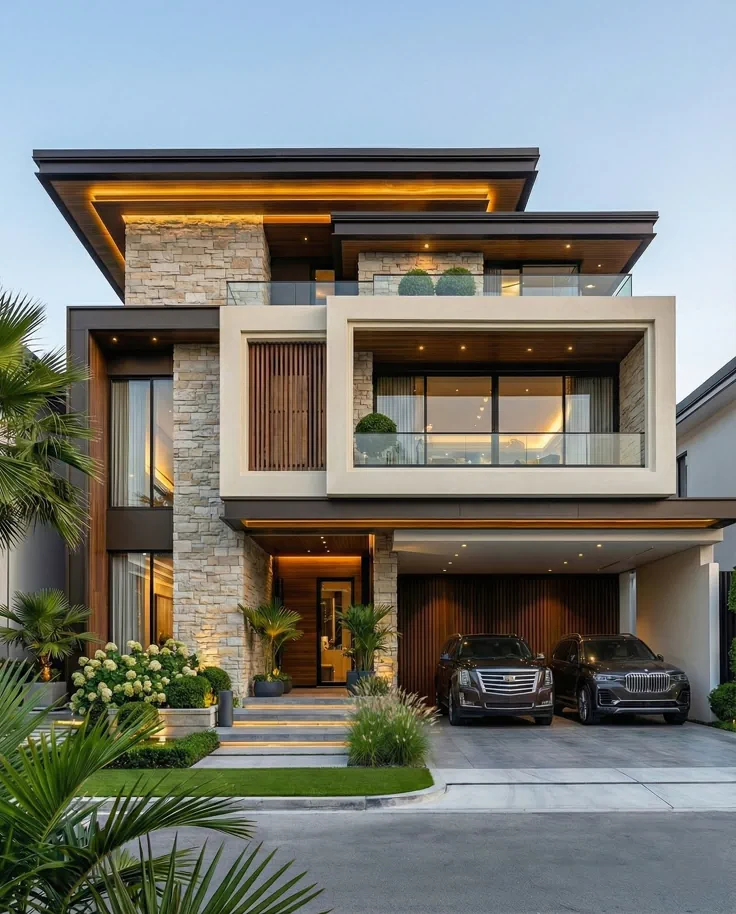
Facade, Lighting and Balcony Ideas for a Premium Home
A home starts making an impression before anyone even steps inside it. The facade sets the first tone, lighting shapes how every room feels through the day, a...
A home starts making an impression before anyone even steps inside it. The facade sets the first tone, lighting shapes how every room feels through the day, and the balcony often becomes the one space where indoors and outdoors quietly meet. Get these three right, and a home starts to feel genuinely premium — not because of how much was spent, but because of how thoughtfully it was designed.
Let the Facade Do the Talking
A facade is more than just an exterior wall — it's the first thing that tells visitors, and even you, what kind of home this is. A clean, well-proportioned facade with a restrained material palette almost always looks more premium than one crowded with too many textures and colours competing for attention. Natural materials like stone cladding, exposed brick, or textured concrete tend to age gracefully and give a home a grounded, timeless character, while glossy synthetic finishes can start looking dated within a few years.
Lighting integrated into the facade itself is a small touch that makes a big difference after sunset. Subtle uplighting along architectural features, or warm linear lighting tracing the edges of balconies and window frames, gives a home a quiet elegance at night without looking like a hotel lobby. The key is restraint — a facade that's dramatically lit everywhere loses its charm quickly, while a few well-placed highlights create depth and character.
Windows deserve just as much thought as walls. Larger windows, especially ones with slim frames, make a facade feel more open and contemporary, and they double up as a way to bring in more natural light inside. If privacy is a concern on lower floors, frosted glass panels or vertical louvres can maintain the clean look of the facade without compromising on comfort inside.
Layer Your Lighting Instead of Just Turning It On
The biggest difference between a home that feels ordinary and one that feels premium often comes down to lighting layers, not just brightness. Relying on a single bright ceiling light in every room tends to flatten a space and make it feel more functional than inviting. Instead, combining ambient lighting for general illumination, task lighting for specific activities like reading or cooking, and accent lighting to highlight art, textures, or architectural features gives a room depth and warmth that a single light source simply can't achieve.
Warm white lighting, generally in the 2700K to 3000K range, tends to make living rooms and bedrooms feel cosy and welcoming, while cooler, brighter lighting works better in kitchens and workspaces where focus matters more than mood. Dimmable fittings are worth the investment almost everywhere, since they let you shift a room's feel from bright and functional during the day to soft and relaxed in the evening, without needing separate fixtures for each mood.
Statement lighting also plays a big role in how premium a home feels. A well-chosen pendant light over a dining table, or a sculptural floor lamp in a living room corner, does more for a space than several smaller, forgettable fixtures scattered around. The trick is choosing one or two strong pieces per room rather than trying to make every light fixture a statement, which usually ends up looking busy instead of curated.
Outdoor and transitional spaces like entryways, corridors, and staircases are often under-lit, even in otherwise well-designed homes. A little attention here — soft wall-mounted lights along a staircase, or a warm pendant at the entrance — makes the whole home feel considered from the moment someone walks in, not just in the rooms meant for entertaining guests.
Turn the Balcony Into a Space You Actually Use
A balcony that's just wide enough to stand in rarely gets used, no matter how nice the view is. A genuinely premium balcony feels like an extension of the living space rather than an afterthought, and that starts with giving it enough usable width and depth for actual furniture — even a small two-seater setup with a side table makes a balcony feel like a destination rather than a passageway.
Flooring makes a bigger difference here than most people expect. Weather-resistant wood-look tiles or natural stone give a balcony a warm, grounded feel, while plain grey cement flooring, even if practical, rarely feels premium. Adding a few potted plants or a small vertical garden softens the space and brings in a sense of calm, especially in urban settings where greenery is otherwise hard to come by.
Railings are another detail worth getting right. Glass railings with slim metal frames tend to keep the view open and make a balcony feel more spacious, while solid or heavily patterned railings can make even a decently sized balcony feel boxed in. If privacy from neighbouring buildings is a concern, frosted glass panels or slatted wood screens offer a middle ground that doesn't fully close off the space.
Lighting on the balcony deserves the same layered thinking as the rest of the home. Soft, warm lighting along the railing or ceiling, paired with a small table lamp or lantern-style fixture, turns the balcony into a pleasant spot for a morning coffee or an evening wind-down, rather than just a place that happens to have a light bulb.
Bringing It All Together
None of these elements work in isolation. A beautifully lit facade loses its impact if the windows behind it are cluttered or mismatched, just as a well-designed balcony feels incomplete without lighting that carries the same warmth as the rest of the home. The homes that feel genuinely premium are usually the ones where the facade, lighting, and balcony were thought through together, as one continuous design story, rather than as separate boxes to check off during construction